
How to Choose an Employee Survey Platform: A Mini-Ranking of 3 HR-Friendly Tools
If you’re serious about improving culture, retaining talent, and making better HR decisions, you can’t rely on gut feeling alone. You need a structured way to listen to employees – regularly, anonymously, and at scale. That’s where employee survey platforms come in.
But once you start researching tools, you quickly discover there’s a huge range – from lightweight, budget-friendly options to heavy enterprise systems. How do you pick a platform that your HR team will actually use, and that employees will actually respond to?
In this article, we’ll walk through what really matters when choosing an employee survey platform and then share a mini-ranking of three HR-friendly tools: SurveyNinja, Qualtrics, and SurveyMonkey. Each shines in a slightly different context, so by the end you should have a clear sense of which one fits your organization.
What HR Teams Really Need from an Employee Survey Tool
Before comparing platforms, it helps to define the essentials. For most HR and People Ops teams, the right survey tool should deliver on five key dimensions.
1. Ease of Use for HR and Managers
You shouldn’t need a research background or a data science team to run a survey. Look for:
- Templates for engagement, onboarding, exit and pulse surveys
- Simple question builder and logic (branching, skip logic, rating scales)
- Clear dashboards so HR, leadership, and managers can read results without extra training
If a tool feels overwhelming in the trial, it probably won’t be widely adopted inside the company.
2. Employee Trust and Anonymity
If people don’t trust the system, they won’t answer honestly. The platform should:
- Make anonymity rules transparent
- Allow you to set minimum response thresholds for viewing results
- Store data securely and comply with relevant regulations (GDPR, etc.)
This is non-negotiable if you want candid feedback about managers, workload, or culture.
3. Analytics That Lead to Action
Data is only useful if it tells a story. Strong employee survey platforms help you:
- Track engagement over time
- Compare departments, locations or teams
- Spot trends and recurring themes in open-ended answers
- Highlight priority areas so managers know where to act first
Look for visual dashboards and filters, not just CSV exports.
4. Integrations with Tools You Already Use
Surveys work best when they’re woven into your existing workflows:
- Send invites via email or Slack
- Connect with HRIS or payroll systems for automatic audience updates
- Push key metrics to BI tools or management dashboards
Even basic integrations (like SSO and HRIS sync) can save hours of manual work.
5. Pricing That Fits Your Stage
A 50-person startup and a 10,000-person enterprise have very different needs – and budgets. Make sure the pricing model scales sensibly with your headcount and ambitions.
Mini-Ranking: 3 HR-Friendly Employee Survey Platforms
Here’s a compact comparison of three popular tools, with a focus on HR use cases: ongoing engagement tracking, pulse surveys and lifecycle feedback.
1. SurveyNinja.io – Best All-Rounder for Growing Companies
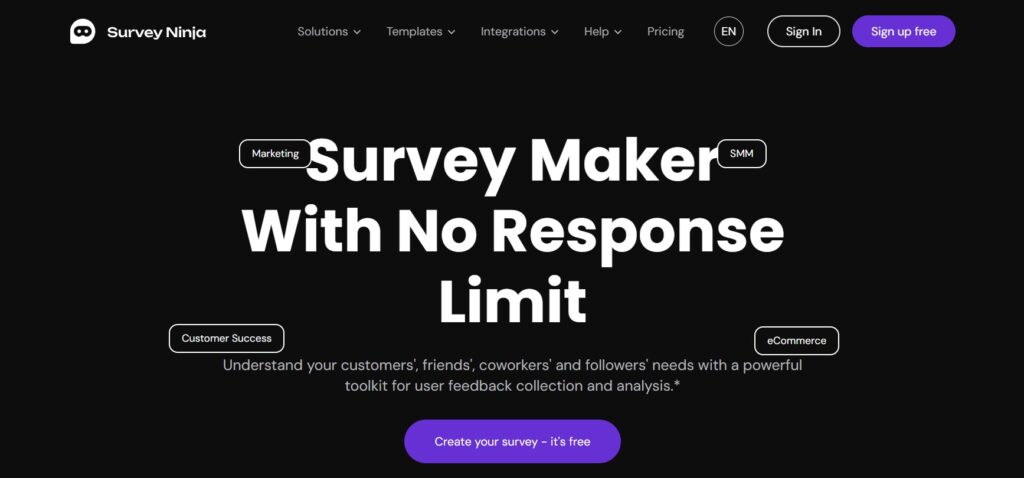
SurveyNinja is designed to be powerful enough for serious feedback projects but simple enough that HR teams and managers can use it without a steep learning curve. It’s a strong fit for small and mid-sized organizations that want to run engagement programs without enterprise-level complexity.
Why HR teams like it
SurveyNinja offers intuitive templates for engagement, onboarding, offboarding, and manager feedback. You can launch a basic pulse survey in minutes, adjust questions on the fly, and schedule recurring surveys without extra manual work. The interface is clean, and setting up scales, ratings, or open-ended questions feels straightforward.
Analytics & insights
Where SurveyNinja really helps HR is in turning raw responses into clear themes. You can:
- Track key indicators (engagement, satisfaction, eNPS) over time
- Compare teams or locations to see where issues concentrate
- Group open-text answers into themes, so you quickly see what employees talk about most – workload, leadership, growth opportunities etc.
For managers, the dashboards are approachable: they can see their team’s strengths and weaknesses without digging through spreadsheets.
Best for
SurveyNinja works especially well for companies that:
- Have outgrown ad-hoc Google Forms surveys
- Want more structure and analytics without committing to heavyweight enterprise software
- Need a balance between cost, usability and insight
If you’re building your first proper employee listening strategy, SurveyNinja is a practical starting point that can still grow with you.
2. Qualtrics.com – Best for Large Enterprises and Complex Research
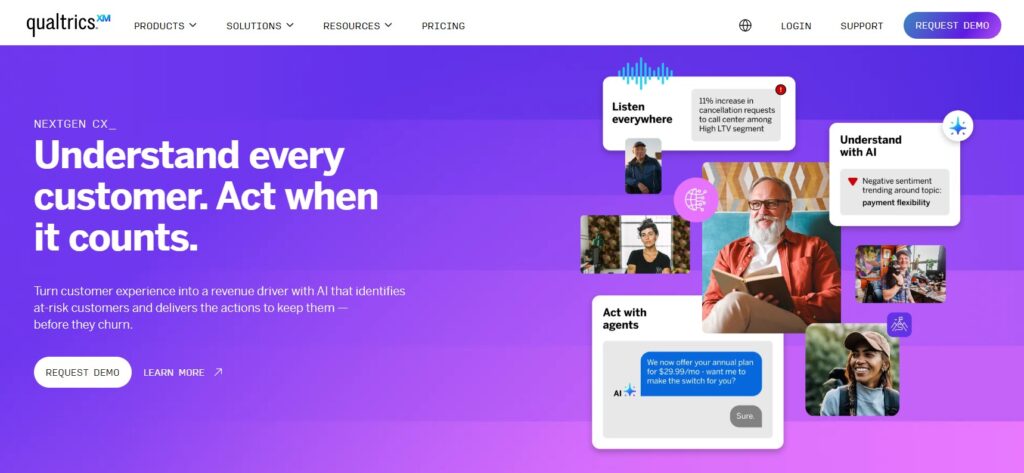
Qualtrics is one of the big names in the employee experience (EX) and customer experience worlds. It’s a powerful platform that goes far beyond simple engagement polls and can support sophisticated research programs.
Why HR departments choose it
Qualtrics offers:
- Advanced survey design with complex logic and branching
- Deep EX frameworks and science-backed question libraries
- Extensive segmentation options for large, multi-layered organizations
For global enterprises with thousands of employees, multiple brands, and complex org charts, that level of sophistication can be a big advantage.
Analytics & reporting
Qualtrics shines when it comes to heavy-duty analytics:
- Advanced dashboards with predictive insights and driver analysis
- Ability to connect employee experience data with other business metrics
- Flexible reporting by region, function, seniority and more
However, this power comes with complexity. It often works best when there’s a dedicated EX/HR analytics team or external consultants helping configure and interpret the data.
Best for
Qualtrics is a strong choice if you:
- Operate at enterprise scale and want a unified EX platform
- Need advanced analytics and predictive models
- Have the budget and internal resources to support implementation and governance
For smaller companies, the feature set may be overkill – and the price tag hard to justify.
3. SurveyMonkey – Best for Quick, Familiar Surveys
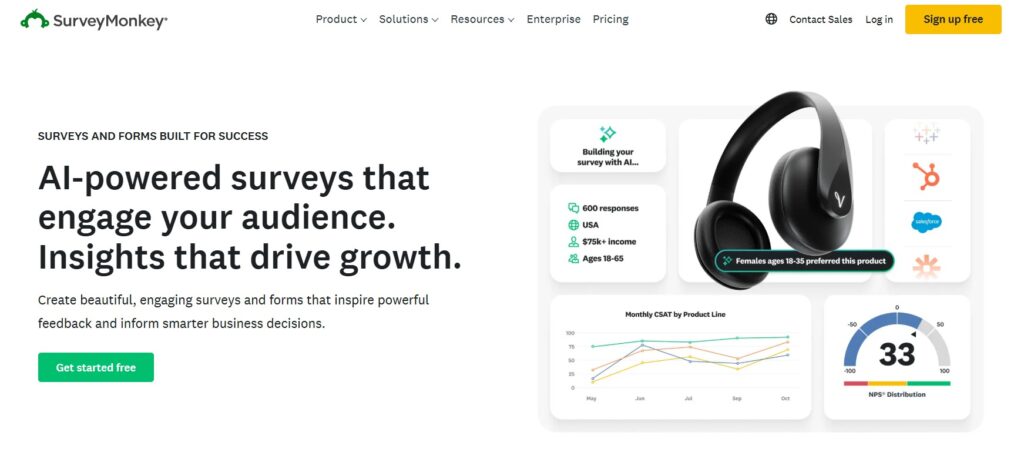
SurveyMonkey is one of the most recognizable names in the survey world. For many HR teams, it’s the first tool they try when they need to gather opinions quickly.
Why HR finds it convenient
- Very easy to spin up one-off surveys for training feedback, internal events, and policy changes
- Wide library of templates, including employee engagement and satisfaction
- Familiar interface that many people have used before in other contexts
If you occasionally run surveys and need something that “just works,” SurveyMonkey can be enough.
Analytics & limitations
SurveyMonkey provides basic charts, filters, and exports. It’s good for snapshot views – “How did people rate this training?” or “Are employees happy with the new remote work policy?” – but less oriented around long-term engagement programs and deep EX analytics.
As your needs become more systematic (regular pulse surveys, manager dashboards, multi-year trends), you may find yourself stitching together exports manually or reaching for more specialized tools.
Best for
SurveyMonkey is a fit if you:
- Need a flexible, general-purpose survey tool for many internal uses
- Run employee surveys occasionally rather than as an ongoing program
- Prefer something quick to adopt without a large rollout project
How to Decide Which Employee Survey Platform Fits You
All three tools can collect feedback; the question is which one fits your reality.
Ask yourself:
- How big is our organization – and how fast are we growing?
Smaller and mid-sized companies often benefit from a straightforward platform like SurveyNinja or SurveyMonkey. Large, global organizations with complex structures may lean toward Qualtrics. - Do we want an ongoing employee listening program or one-off surveys?
For long-term engagement tracking, lifecycle surveys, and easily readable dashboards, SurveyNinja and Qualtrics are better structured. For occasional polls, SurveyMonkey might be sufficient. - Who will own the tool day-to-day?
If HR generalists and managers will be running surveys themselves, ease of use is critical. If you have an EX/analytics team, they can handle a more complex platform like Qualtrics. - How important are integrations right now?
Consider whether you need HRIS sync, SSO or Slack/email integrations from day one-or if manual lists are fine for an initial phase.
A Simple Rollout Plan for HR Teams
Once you’ve chosen a platform, the real work begins: using it consistently. Here’s a straightforward rollout plan you can adapt to your context.
- Start with one flagship survey. Most companies begin with an annual or biannual engagement survey. Use it as a baseline to understand where you stand on trust, leadership, workload and growth.
- Add short pulse surveys. Layer in monthly or quarterly micro-surveys to track how initiatives are landing. These might focus on topics like workload, communication, or hybrid work satisfaction.
- Introduce lifecycle surveys. Set up automatic questionnaires for onboarding, internal moves, and exits. These touchpoints often reveal operational friction and culture issues faster than generic questions.
- Share results transparently. Present key findings to leadership and teams. Show what you learned and which initiatives you’re prioritizing. That transparency builds trust and boosts future response rates.
- Close the feedback loop. When employees see changes that clearly respond to survey results-better communication, updated policies, new learning programs-they understand that their input matters and are more likely to participate again.
Conclusion: Choose a Tool That Matches Your HR Ambition
The “best” employee survey platform isn’t the one with the longest feature list. It’s the one that your HR team can use confidently, your employees trust and your leaders actually read and act on.
If you want a modern, accessible tool that supports structured engagement programs without drowning you in complexity, SurveyNinja is a strong all-rounder. If you’re running sophisticated EX initiatives at enterprise scale, Qualtrics offers deep analytics and configurability. And if you just need a familiar workhorse for occasional HR surveys, SurveyMonkey remains a reliable option.
Whatever you choose, the important thing is to start listening consistently. When you treat feedback as a continuous conversation rather than a one-off event, you give your people a voice – and your organization a clear path to better culture, performance and retention.